Blogs

Blogs
Peak season is a true test of a merchant's logistical strength. With volumes surging (sometimes 4-5x for Nash merchants) and consumer expectations higher than ever, this short annual window can make or break operations.
A well-executed strategy leads to increased revenue and customer loyalty, but any misstep—like late deliveries or inventory bottlenecks—can result in lost sales and a damaged reputation.
Did you know?
| Consumer expectations are high | Costs are at their highest during peak season | One bad experience can drive down revenue |
| A recent survey by Radial found that 29% of shoppers expect their holiday gifts to be delivered within two to three days–a 53% year over year increase from 2023 | Delivery costs can increase by as much as 30% during peak season (Supply Chain Demand) | 85% of online shoppers say that a poor delivery experience would prevent them from ordering from that online retailer again (Ipsos) |
So how do last-mile leaders efficiently manage rising demand while keeping customers happy?
The solution lies in sophisticated orchestration, which optimizes both internal and external fleets to streamline delivery workflows. By balancing efficiency with customer expectations, merchants can reduce costs, scale their operations efficiently, and deliver reliably—even during the busiest times of the year.
A major challenge for merchants is scaling delivery operations quickly without needing constant manual oversight. When demand surges, merchants must ensure they can scale their fleet capacity—but relying solely on manual processes is time-consuming and prone to error.
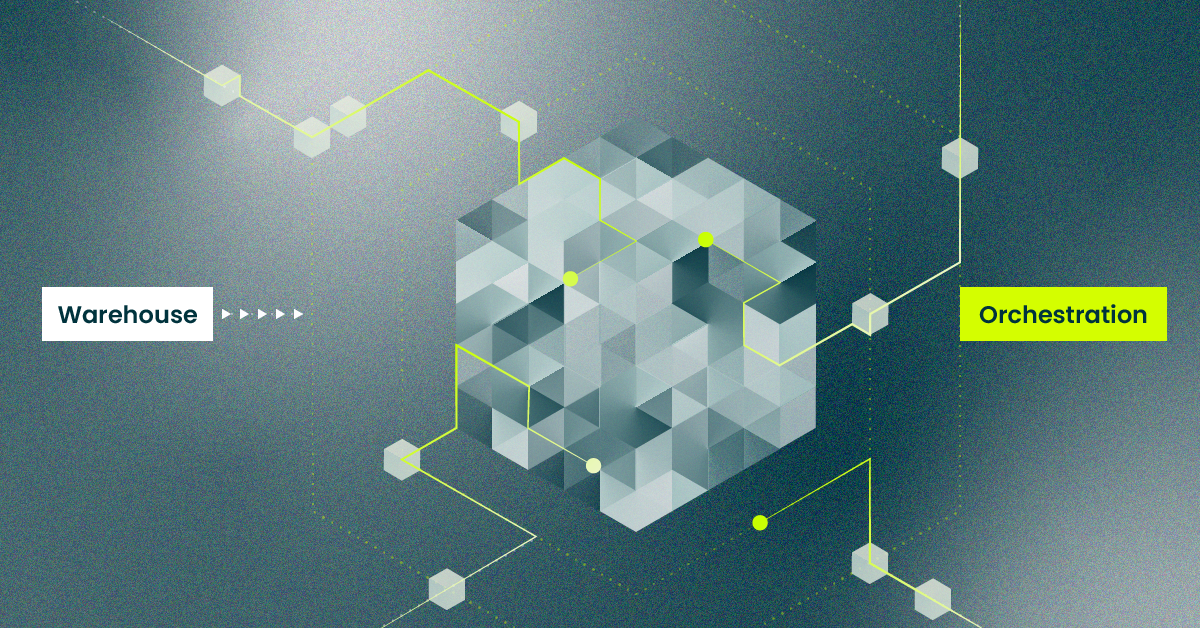
Many logistics teams are turning to automation and orchestration tools to manage their fleets more effectively. The Nash platform allows logistics teams to dynamically adjust fleet capacity in real-time. During peak demand, Nash can quickly increase capacity by onboarding additional fleets from its 3PL delivery network to handle the surge, while during slower periods, it scales back to avoid unnecessary costs. Paired with automated dispatch, this adaptive approach ensures each order is seamlessly matched with the ideal fleet—whether internal or sourced from Nash’s 3PL network—without requiring extensive manual management from operations teams.
Consider this example:
A major big-box retailer uses Nash for their big-and-bulky deliveries.
These deliveries come with additional complexity due to the size and weight of items, as well as customer expectations for installation or specialized handling. Before Nash, the retailer struggled with manual fleet assignments, which became especially problematic during peak season when volumes spike. Now, through automation and orchestration, Nash dynamically assigns orders to the most suitable fleet—whether internal or external—based on factors like real-time fleet availability, reliability score, cost, and location.
This seamless orchestration allows them to handle peak-season surges without operational bottlenecks or excessive human intervention.
By automating the dispatching process, retailers can:
This kind of automation can help logistics teams keep pace with the high demands of peak season while maintaining efficiency and keeping customers satisfied.
Relying on a single fleet during peak season is a risk. To handle the inevitable surges in demand, merchants need a more diversified carrier strategy that leverages both national fleets and smaller, local providers. This approach helps scale capacity while keeping costs manageable and delivery times short.
Key benefits of carrier diversification:
Example: A large retailer uses Nash to leverage both national fleets and smaller, local providers for big-and-bulky deliveries. For example, a local fleet of 30 trucks in Chicago specializes in these types of deliveries. By using these smaller providers during peak season, the retailer can scale up or down as needed without committing to long-term contracts or fleet expansion.
The main challenge during peak season is ensuring consistent, on-time deliveries across varying fleet types. For merchants managing multiple delivery workflows—from small, on-demand grocery orders to large-item shipments—optimizing fleet usage cannot be overstated.
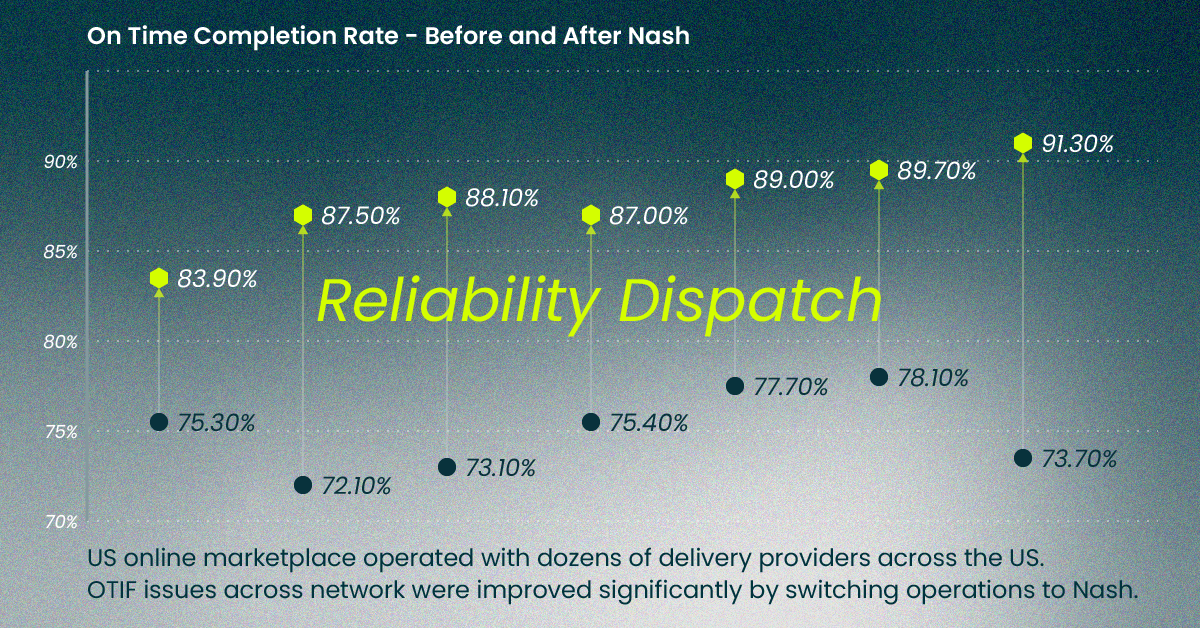
Take, for instance, a major U.S. online marketplace that operated with dozens of delivery providers across the country. Before implementing an orchestration platform, their On-Time Completion Rate (OTCR) was inconsistent and often fell below 75%, leading to customer dissatisfaction and logistical inefficiencies.
However, by switching to Nash for multi-fleet integration and live delivery operations, they experienced a significant improvement in their OTCR, with rates rising to over 87.5% (a 12% jump within two months!)—a clear indicator of improved reliability and customer experience. The platform’s ability to automate fleet assignments and optimize routes dynamically ensured that this merchant could meet demand peaks with higher reliability.
This kind of orchestration, especially with features like reliability dispatch, helps reduce the risk of delayed deliveries, and improves overall operational efficiency during peak seasons.
The Nash orchestration platform automates and optimizes fleet assignments. Instead of static rules, Nash uses real-time data to match each order with the right fleet.
As you prepare for 2024’s peak season, consider whether your current fleet strategy is ready to scale. Nash can help you with orchestration and automation—to balance your fleet resources to meet peak demand without sacrificing delivery quality or efficiency.
Reach out for a demo and see how Nash can transform your peak season strategy.