Blogs

Blogs
If you’re a leader in logistics, you're likely facing the pressure of building out a 2025 last-mile strategy. And with last-mile delivery accounting for about 50% of total shipping expenses for merchants, and 75% of end-customers willing to spend more for an excellent last-mile experience, the stakes are high.
While cost savings are always top of mind, leading merchants are innovating beyond costs. They’re analyzing their entire fleet setup—both internal and external—and leveraging them strategically to drive key business goals, such as:
So how do merchants balance cost, customer satisfaction, and market shifts within fleet strategy? The good news: with the right orchestration, you can apply these balances across fleets whether internal, external or you’re taking on a hybrid approach.
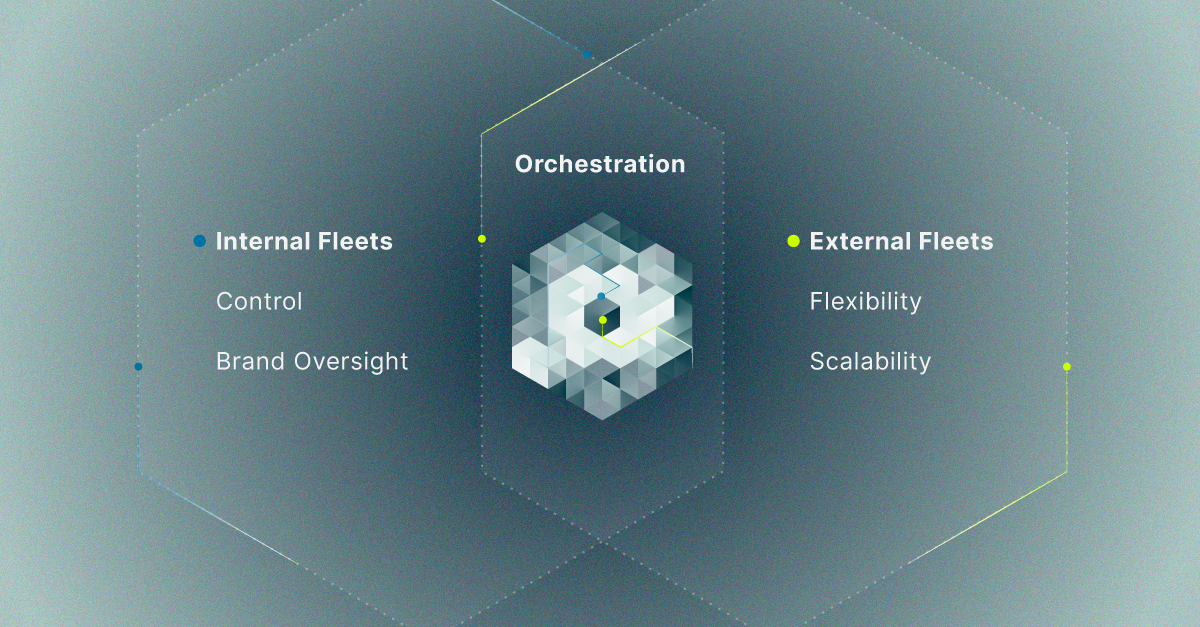
Internal fleets have traditionally been used to give companies control over their drivers, customer experience, and brand representation. Merchants like Kroger and Woolworths use internal fleets in core markets to ensure a consistent customer experience. With their own drivers, merchants can control operational components, such as training and performance tracking, ensuring a consistent delivery experience.
Some benefits of internal fleets include:
However, running an internal fleet has its trade-offs:
Internal fleets can work well in core markets where you want tight control, but they’re harder to scale efficiently during peak demand periods.
External fleets offer flexibility. When merchants need to extend delivery radius or handle a seasonal rush, external providers let merchants scale without upfront investments in new vehicles or additional drivers.
Some advantages of external fleets include:
There’s a misconception that using external fleets means sacrificing control over the customer experience. But merchants can still maintain strict performance standards with external providers through delivery orchestration platforms that offer defined Standard Operating Procedures (SOPs) and real-time tracking. This approach allows businesses to combine flexibility with operational excellence.
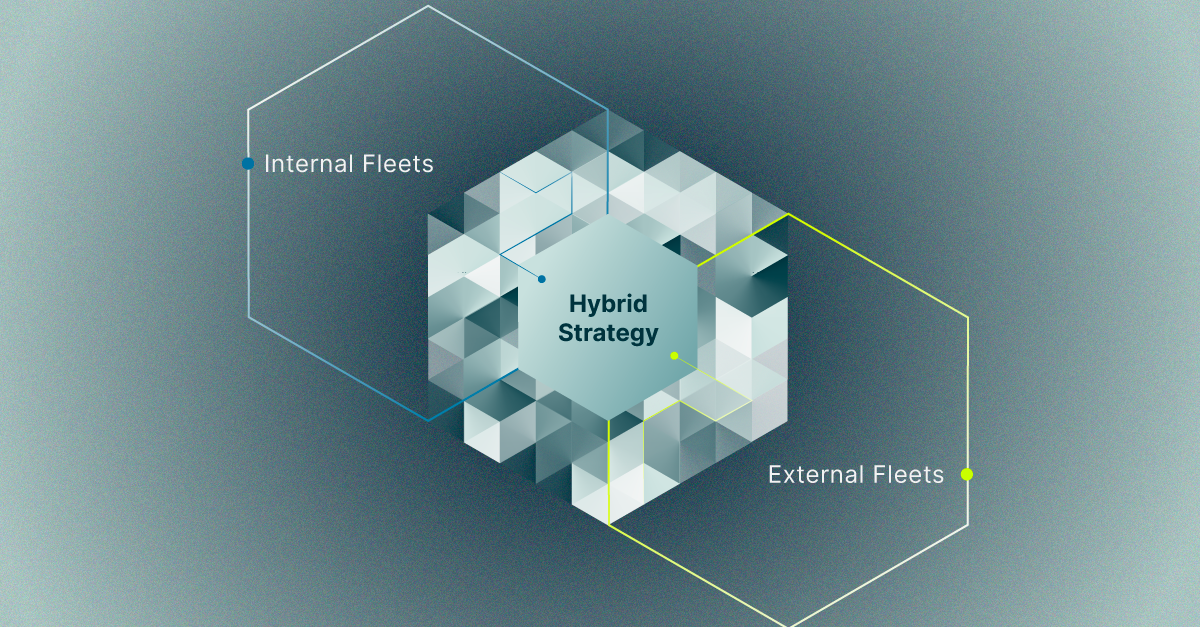
For many merchants, it’s not either/or—in fact, a hybrid fleet strategy is ideal. The hybrid approach offers the benefits of both internal and external—allowing companies to keep control where it matters most and scale with external fleets when needed.
The key to making a hybrid approach work is sophisticated orchestration. Rather than relying on basic dispatch rules, retailers can use data-driven insights to ensure the right fleet handles the right delivery. The hybrid approach is about balancing cost efficiency, operational flexibility, and customer satisfaction.
In early 2024, a major pharmacy retailer faced challenges with its delivery strategy. The company had long relied on its internal fleet, but with increasing costs and the need for scalability, they needed a more flexible solution.
| Business Type |
|
|---|---|
| Problem |
|
| Changes Made |
|
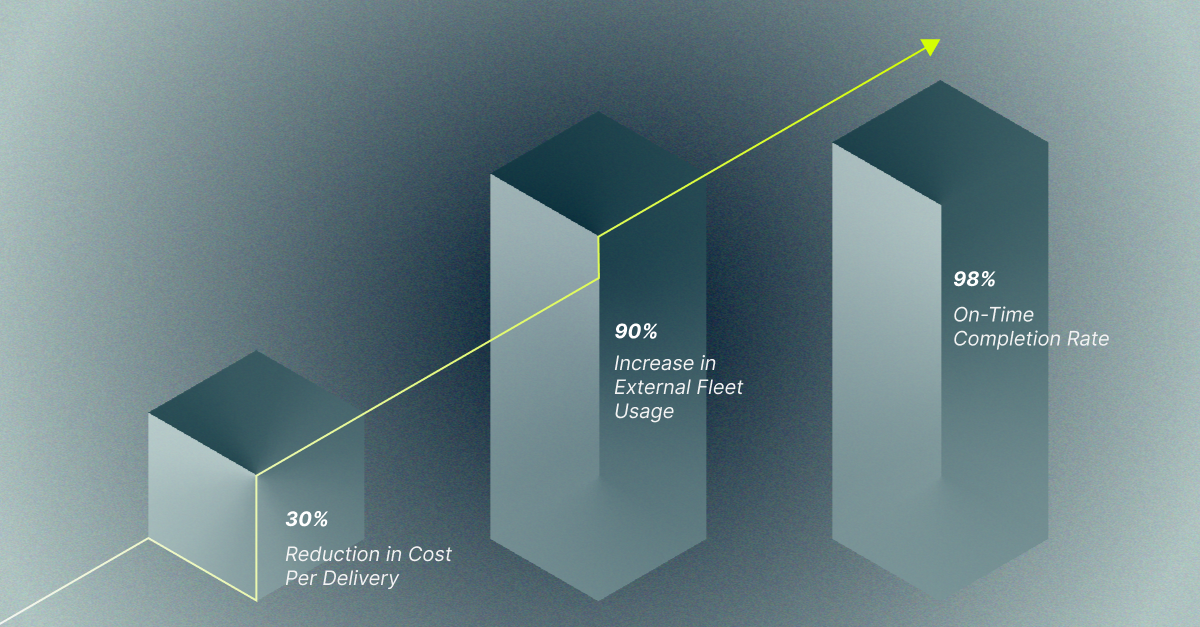
The merchant saw incredible results from their tailored hybrid strategy:
This transition allowed the retailer to significantly reduce costs while maintaining the high delivery standards that were essential for the brand and overall business growth.
The Nash platform simplifies managing both internal and external fleets, ensuring each delivery is dispatched to the right fleet based on your business’s unique needs—whether it’s internal drivers or a third-party provider. Nash works behind the scenes, making sure everything runs efficiently, saving you time, effort, and costs.
Here’s how:
With access to over 1000 external fleets, Nash gives merchants greater fleet diversification to refine operations and scale without losing control. Nash’s AI-driven orchestration ensures successful dispatch across all fleet types, moving beyond basic dispatch rules to smarter, data-driven decisions.
With Nash, balance the strengths of internal and external fleets, offering flexibility without sacrificing control over the customer experience. Logistics leaders get the best of both worlds: cost savings, efficiency—and the ability to scale while maintaining high-quality delivery performance.
As you plan your last-mile strategy for the coming year, consider the following questions for your team to determine the best fleet approach:
Reflecting on these questions will help ensure your fleet strategy aligns with your 2025 goals, whether you're focused on cost savings, flexibility, scaling operations—or all of the above.
Nash can help you orchestrate a hybrid fleet strategy that balances it all.
Reach out today for a demo, and to learn how Nash’s platform can streamline your fleet management.