Insights
Insights
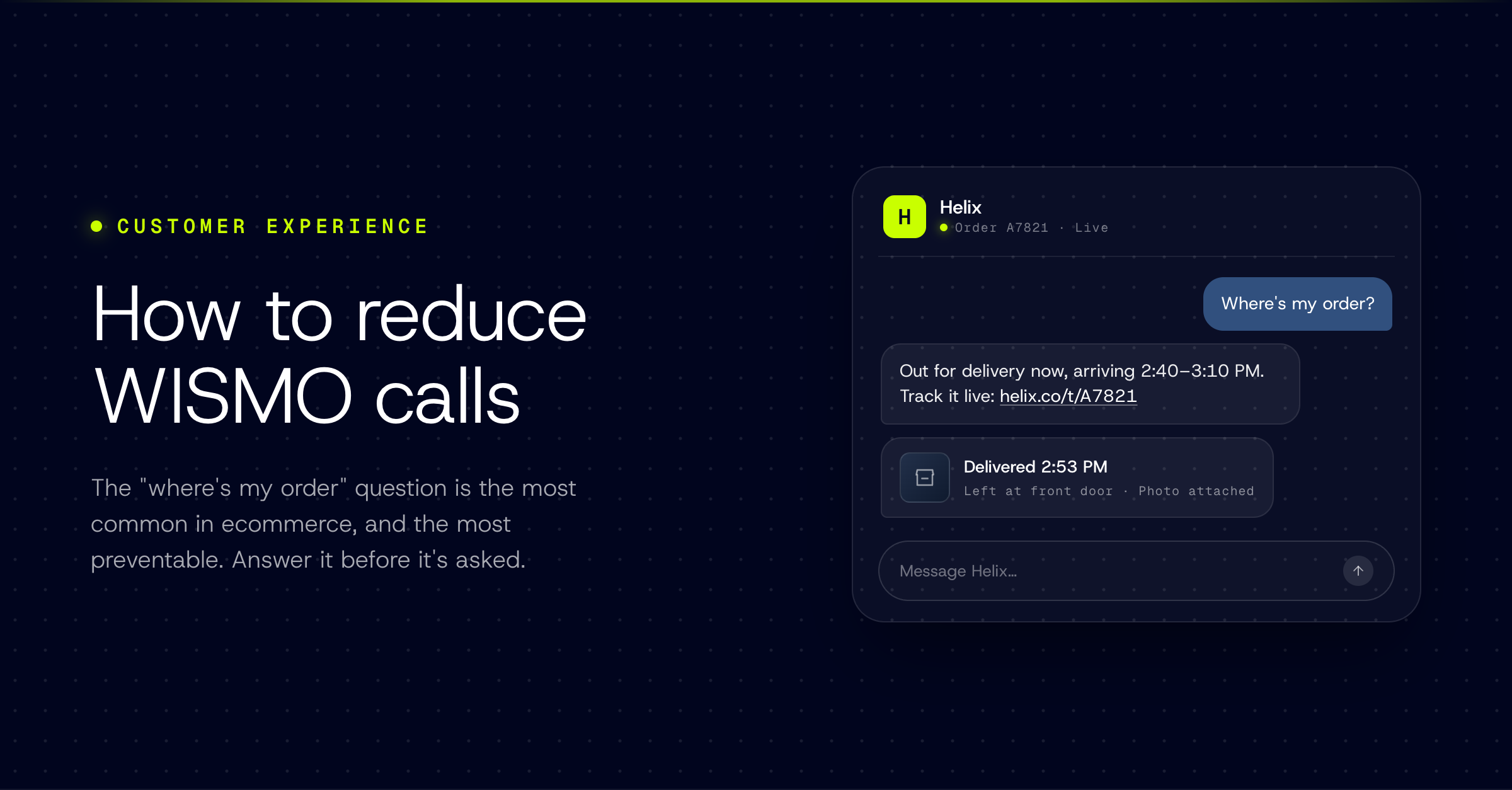
WISMO, short for "where's my order," is the question a customer asks when they can't see where their delivery is. It is the single most common reason customers contact an ecommerce brand, and one of the most preventable. Nash customers reduce WISMO calls by 54% by answering the question before it is asked.
By Gorgias's data, "where is my order" is the single most common support request in ecommerce, around 18% of incoming contacts. Broader industry estimates put it at a quarter to two-fifths of total support volume, climbing past half during peak weeks. For a brand shipping tens of thousands of orders a month, that is a support team sized around a question the operation could have answered itself.
WISMO is worth measuring as its own number: the share of orders that generate a "where is my order" contact. Best-in-class retailers run it below 8 to 10%, and the strongest push under 4%. It moves in lockstep with delivery success. Nash operations run above 99% delivery success, and the fewer orders that miss, the fewer customers have any reason to ask.
A single contact is not free. Cross-industry benchmarks put the average customer contact around six to seven dollars, and a phone call closer to seventeen to twenty-five. Multiply that by WISMO's share of a growing contact volume and the number gets serious fast. The ticket is the smallest part of the bill. The larger costs sit around it: a support team scaled to a problem that should not exist, agents pulled off higher-value work, and customers who stop trusting the delivery date and stop converting on it.
What a single customer contact costs, by channel
Customers do not reach for support because they enjoy it. They ask when the operation leaves a gap: a delivery date they never believed at checkout, a tracking link that does not reflect reality, or no word when something slips. The appetite for that information is not subtle. Consumer research finds 60% of shoppers check an order's status every day. A 2025 delivery survey found 88% consider real-time tracking critical to a good experience, yet a third could not track their most recent delivery at all.
The common response to WISMO is to make the support queue cheaper: canned replies, a chatbot wired to the tracking API, more agents in November. That work lowers the cost of each contact. It does not lower how many arrive, because it does nothing about the reasons customers call. The number falls when the operation answers the question upstream. The work that does it:
The data on that last move is striking. Brands that send proactive shipping and delay alerts report cutting WISMO by up to 65%, and some by as much as 75%. Notified customers are also about three times more forgiving of a delay, so the payoff is lower support volume and steadier loyalty at once.
The same blind spot that drives "where is my order" drives its sequel, "where is my refund." A missed delivery with no proactive word becomes a support contact, then a return, then a refund investigation. Close the visibility gap once and the whole post-purchase tail gets quieter, which is the end of refund investigations as a standing cost.
Nash treats WISMO as a visibility problem, not a support problem. On Nash, the Delivery Promise is set against live capacity across every fleet and carrier, so the date a customer sees is a date the operation can keep. Branded Tracking runs inside the customer's own experience, in your own brand. Notifications fire on every status change, and when the system senses an exception it reaches the customer before they would think to ask. Proof of Delivery confirms the drop, so when something does go wrong, you always have it right.
That is where the results come from. Nash customers cut WISMO calls by 54% and lift NPS by 15 points, not by adding agents, but by removing reasons to call. The visibility that keeps customers off the phone is the same visibility that keeps them buying, because the delivery promise stays believable. Run every delivery on one platform, and the question stops arriving.