Engineering
Engineering
The most sophisticated logistics operations in the world were not designed. They accreted.
A national grocer's fulfillment stack is twenty years of decisions layered on top of each other. The routing engine was built for one business model, then extended to a second. When a merger doubled the store count, middleware got wrapped around it; when curbside pickup arrived, it was patched again. A pharmacy chain's dispatch logic encodes regulatory constraints and union rules, and underneath those, hard-won operational judgment that exists nowhere in documentation, only in the heads of the people who run it.
This is not a failure of those companies. It is what winning looks like at scale. Nash works with the largest players in every industry we serve, and the largest players got there by building systems complex enough to run businesses that complex. The complexity is not incidental. It is the moat.
Which creates an honest tension for any platform that wants to plug into that world: the value of Nash is real, but it has to land inside an environment that took decades to build and cannot pause while you integrate. How you close that gap determines whether a customer realizes value in weeks or watches a promising deployment stall for quarters.
Our answer is the forward-deployed engineer.
We measure our implementations by one thing: how quickly the customer's operation is measurably better. Not when the contract is signed. Not when the API keys are issued or the kickoff deck is presented. When the first delivery routes differently because Nash decided it should, and the outcome improved.
That framing changes what implementation is. If the goal is velocity of realized value, the bottleneck is almost never the software. It is understanding. Someone has to know, precisely, how the customer's systems actually behave: where orders originate, which constraints are hard and which are habits, where the undocumented logic lives, which edge cases occur once a year and which occur every Tuesday.
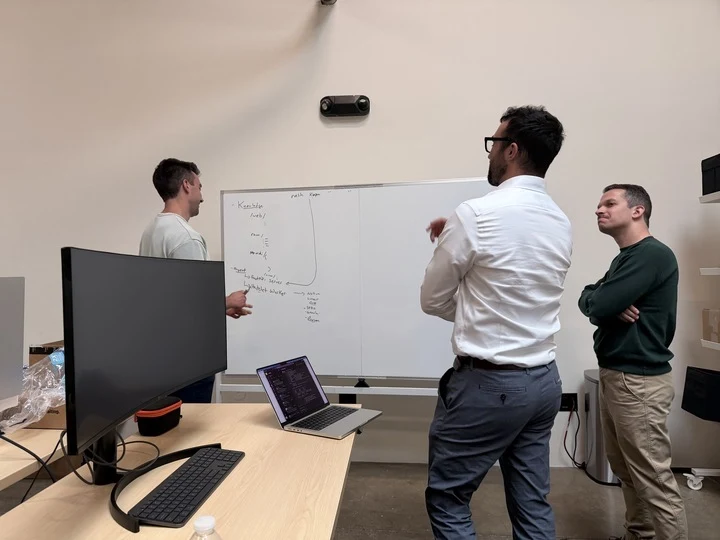
The forward-deployed engineer's first job is to become an expert in that system. Not a generic expert in logistics. An expert in this customer's warehouse management quirks and carrier contracts, and in how this customer's operation fails on a peak day. Only then can they do the real work: translating what Nash does into the language and architecture of that environment, so the platform lands where it creates the most value, disturbs the least of what already runs, and takes the least time, for both sides.
That translation work is where deployments live or die. It is also where most vendors do not go. Off-the-shelf software leaves the translation to the customer. Custom development starts from zero and takes years. The FDE motion is the third path: the core platform arrives ready, and the engineer standing inside the customer's operation shapes exactly how it connects.
Three ways a platform meets an operation
The core platform arrives ready either way. What changes is who closes the gap to the operation.
And the connection is proven, not asserted. Before a customer's operation depends on Nash, the platform runs in shadow, planning the same live demand the incumbent plans, and the two are scored against each other daily on the numbers the customer already runs the business on: cost per delivery, constraint compliance, and how often a person had to step in. Cutover happens when the evidence clears the bar, not when the timeline says it should, and it happens with a rehearsed way back. The hardest weeks of the year are the best evidence there is, so we run toward them rather than scheduling around them.
Proven in shadow
Proving it this way also means the transition can never be held hostage. An engineer who has modeled the operation from the inside can rebuild what an outgoing vendor is slow to hand over, straight from the customer's own systems, so the move to Nash never depends on the goodwill of the system it replaces.
Here is the part that surprised us least but matters most: the expertise built during implementation does not expire when the system goes live.
An FDE who has modeled a customer's operation from the inside becomes something more useful than an integration resource. They become a thought partner on how that operation moves and evolves. When the customer considers a new fulfillment model or opens a new market, or when carrier terms come up for renegotiation, there is already someone in the room who understands both the customer's constraints and what the platform can do about them. The conversation starts at depth, not at discovery.
And the learning runs in both directions. Every complex environment our engineers work inside teaches us something about how large operations actually behave under pressure. That signal is unusually high fidelity, because it comes from encoding real constraints into a running system, not from surveys or sales calls. It shapes our roadmap directly. A pattern we resolve for one grocer often turns out to be latent in three others; the product improves, and the next deployment gets faster.
This is where it compounds. The customer gets an engineer who knows their system and a platform that keeps absorbing lessons from operations like theirs. We get product direction grounded in the hardest real-world cases that exist. Each deployment makes every subsequent one, including the ongoing evolution of existing ones, better. The same holds inside a single customer: what the engineer builds for the first market, every market after it inherits, and rollout turns from engineering into configuration as it spreads. Value that would otherwise be linear becomes cumulative.
Engineering becomes configuration
I came to Nash from Palantir, which is as close as this industry gets to the origin of the forward-deployed motion. I watched it work from the inside, and I watched why it worked, which is a different thing.
The surface-level lesson is the obvious one: put engineers next to the problem. But plenty of companies have copied the org chart without copying the results, because the org chart was never the point. What made the motion work was a set of convictions underneath it.
First, the FDE owns an outcome, not a ticket queue. At Palantir, the forward-deployed engineer was accountable for whether the customer's mission actually succeeded, and that accountability changed everything about how they worked. They could not hide behind a spec. If the deployment did not move the customer's numbers, nothing else counted. We hold Nash FDEs to the same standard: the metric is the customer's operation improving, not our integration checklist completing.
Second, deployment is a sensing instrument, not a cost center. The most valuable thing Palantir got from forward deployment was not revenue on individual contracts. It was ground truth about how the world's hardest problems actually behave, flowing back into the product faster than any competitor could gather it. That is the feedback I am most deliberate about building here. Every constraint our engineers encode in a customer's environment is signal, and we treat it as an input to the roadmap with the same seriousness we treat a feature request from our largest account.
Third, the motion demands a specific kind of person: technical enough to build, curious enough to sit in a dispatch office at 5am and ask why the third shift routes differently, and confident enough to tell a customer their favorite workaround is the problem. Hiring for that combination is hard and we refuse to compromise on it, because one engineer with all three traits outperforms a team with two.
What we are adapting, rather than importing wholesale, is the terrain. Palantir deployed into institutions where the hardest constraints were data and decisions. Nash deploys into operations where the constraints are also physical: trucks, stores, drivers, weather, a promise made for 6pm. The feedback is faster and less forgiving, which makes the motion more valuable, not less. When the world grades your work every hour, you want your engineers standing where the grading happens.
There is a version of enterprise software that treats customer complexity as a problem to be abstracted away, hidden behind a clean interface and a fixed integration spec. That version breaks on contact with a real national operation, because the complexity was never the obstacle. It was the terrain.
The FDE motion is our commitment to working on that terrain rather than around it. Send engineers forward. Learn the system as it actually is. Translate value into it quickly and precisely. Stay close as it evolves, and let everything learned flow back into the platform.
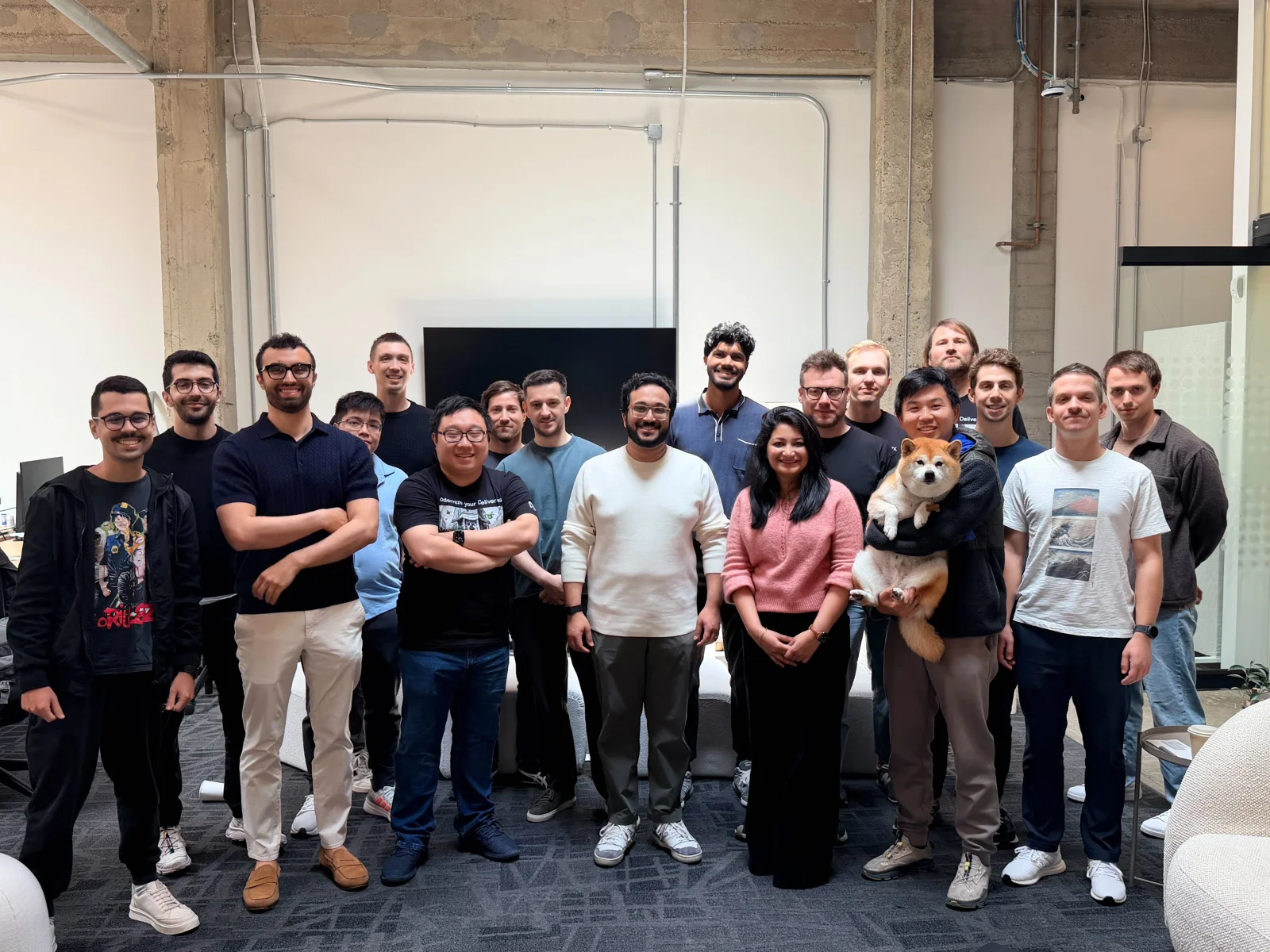
The largest operators in commerce did not get large by simplifying their world. Neither will the platform that powers it.
We are hiring forward-deployed engineers now. If sitting inside the hardest operations in commerce and encoding how they actually run sounds like the job you want, the role is open.